
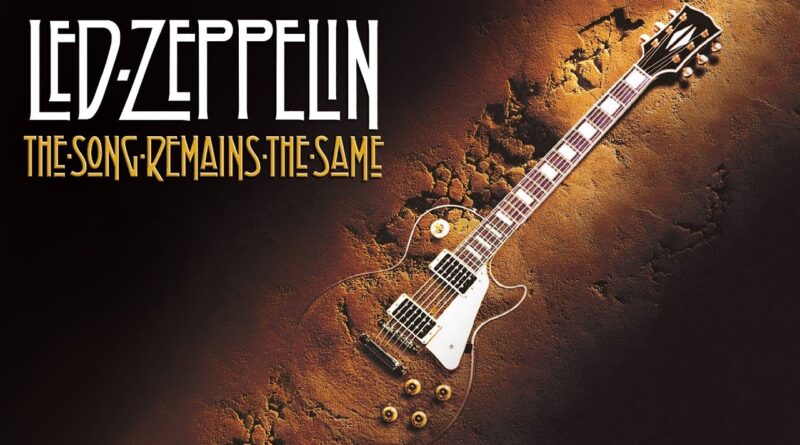
Led Zeppelin: The Song Remains The Same
“The Song Remains the Same” is a mesmerizing, occasionally bizarre time capsule that captures Led Zeppelin at the absolute zenith of their global fame. Filmed during a three-night, sold-out run at New York’s Madison Square Garden in July 1973, it is half blistering concert film and half self-indulgent avant-garde art piece.
Rather than a traditional, linear concert documentary, the film splits its runtime into two distinct elements:
- The Concert (The Core): The backbone of the film is pure, high-voltage rock and roll. It features legendary live performances of iconic tracks like “Dazed and Confused,” “Whole Lotta Love,” “Stairway to Heaven,” and the breakneck title track. The stage performance highlights John Bonham’s thunderous drumming (including a bare-handed solo during “Moby Dick”), Jimmy Page’s dual-neck guitar wizardry, Robert Plant’s soaring vocals, and John Paul Jones’s steady multi-instrumental brilliance.
- The Fantasy Sequences (The Bizarre): Between songs, the film abruptly cuts away to scripted, hallucinatory fantasy vignettes intended to reflect each band member’s individual psyche and personal interests:
- Robert Plant appears as a mythical, sword-wielding Arthurian knight rescuing a fair maiden.
- Jimmy Page climbs a glowing mountain to confront the robed Hermit from the Led Zeppelin IV album art.
- John Paul Jones plays a spooky, masked organist/highwayman riding through the night.
- John Bonham takes a break from the road to drive drag racing cars and spend quiet time on his family farm.
- Peter Grant (Manager) is depicted as a ruthless, Tommy-gun-toting 1930s gangster, mirroring his real-life, aggressively protective management style.
The Song Remains the Same has earned a polarizing but ultimately legendary cult status.
- The Good: Musically, it is spectacular. While purists note that the audio is a patchwork of different nights (and some studio overdubs), the sheer power of the band is undeniable. It beautifully documents the heavy, improvisational jamming style that made Led Zeppelin the premier live act of the era. For fans of classic rock, the concert footage alone is a masterclass in stage presence and musical chemistry.
- The Bad: The fantasy sequences are widely considered bloated, confusing, and dated. Because the film had a troubled production history—including a complete director change mid-way through—these segments were largely shot on a sound-stage in 1974 to patch over missing concert footage. The pacing slows down significantly during these interludes, which can test the patience of casual viewers.
- The Verdict: It is an essential watch for rock fans, not because it is a perfect movie, but because it perfectly encapsulates 1970s rock-star mythos. It is excessive, indulgent, and magnificent all at once.
Views: 1,638